MVP that keeps AI coding agents (Claude Code, Cursor) aligned with a project's architecture.
- Role
- Co-founder, full-stack developer
- Type
- Startup · co-founder
- Year
- 2026
- Links
- Private code
Private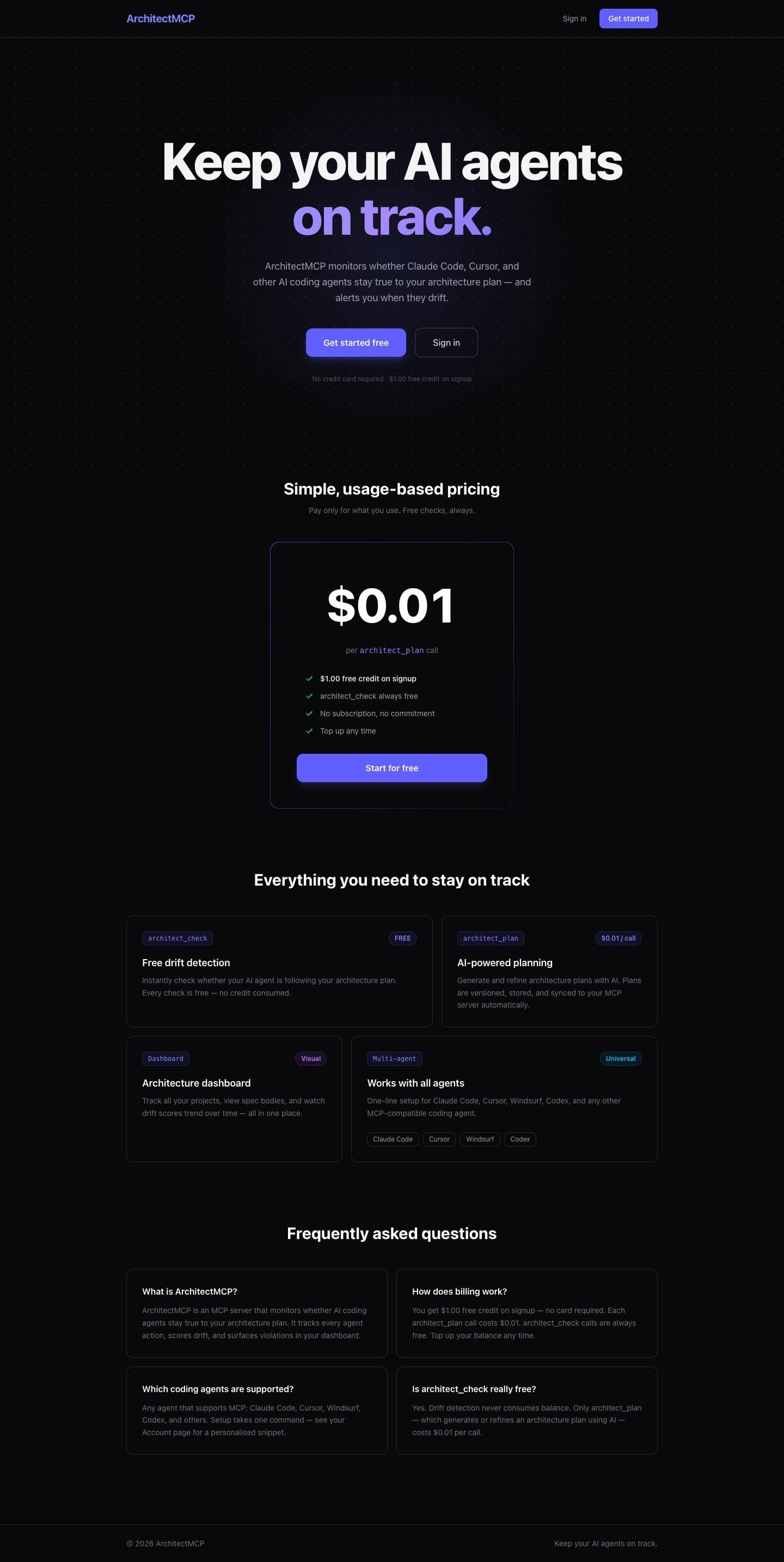

Problem
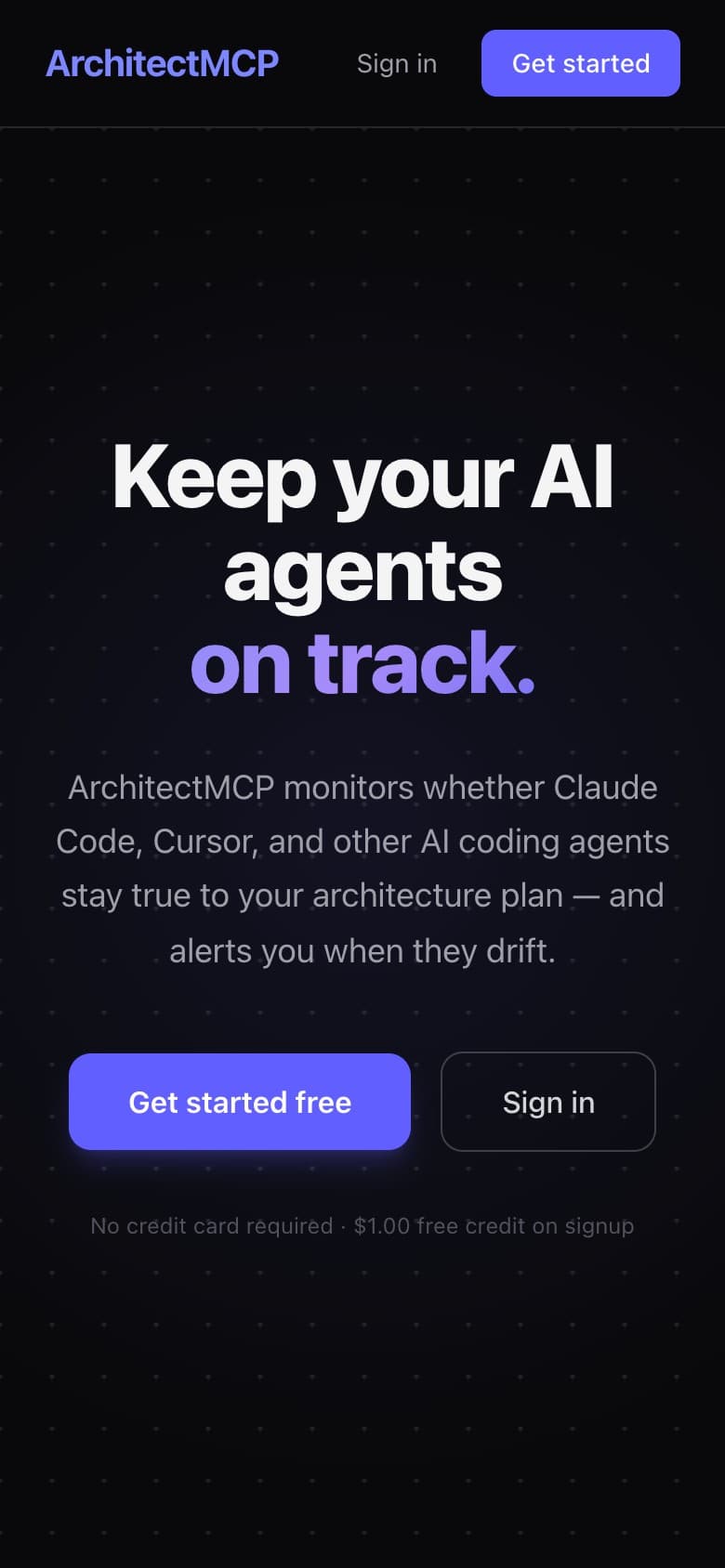
In large codebases, AI coding agents often drift away from the project's architecture rules and the code gets messy.
Solution
A platform that keeps agents tied to the project's architecture through the MCP protocol.
What I did
- As co-founder, built the whole web side of the product in a Turborepo monorepo: the Express.js backend, the Next.js dashboard and shared TypeScript types used by both.
- Wrote the full API key lifecycle: keys are shown once, stored as SHA-256 hashes, can be rotated and are switched off automatically when a subscription ends.
- Built license validation for the Go MCP server: a verified key gets a 7-day JWT with scopes.
- Built usage-based billing: each architect_plan call costs $0.01, the balance is charged in a Prisma transaction only after a successful response, and a retried request is never charged twice.
- Received LemonSqueezy webhooks with HMAC-SHA256 signature checks and handled order, subscription and payment events.
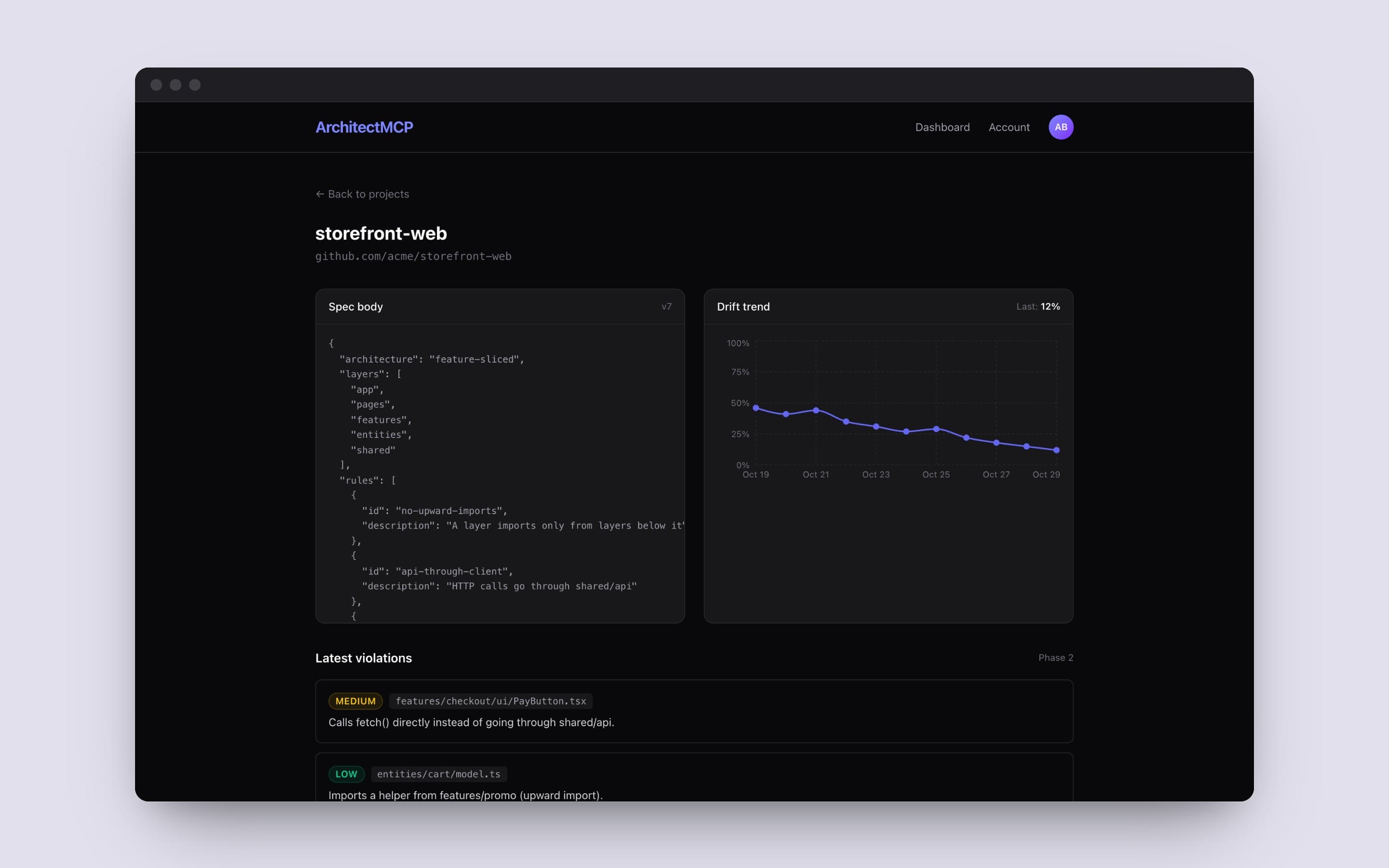
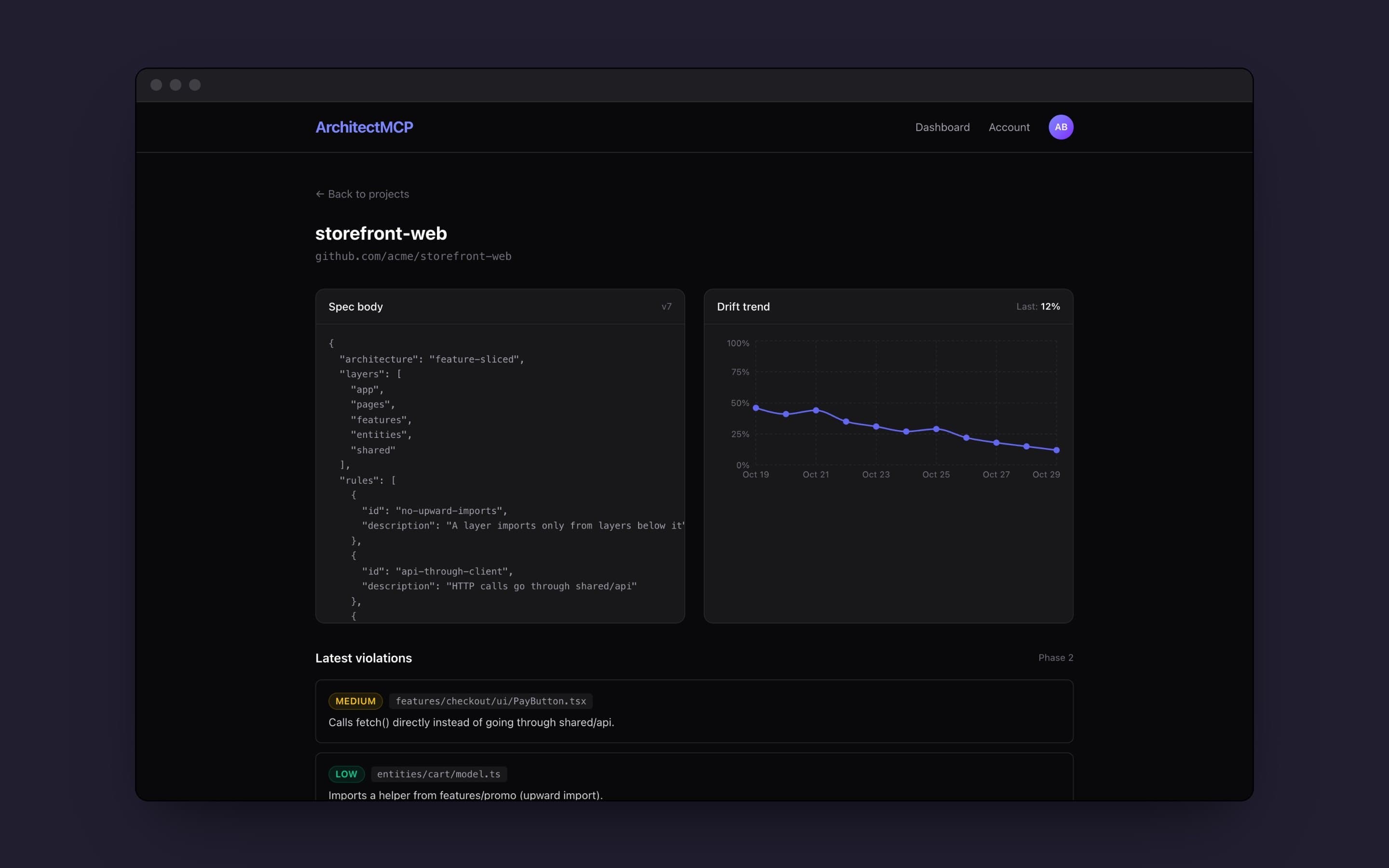
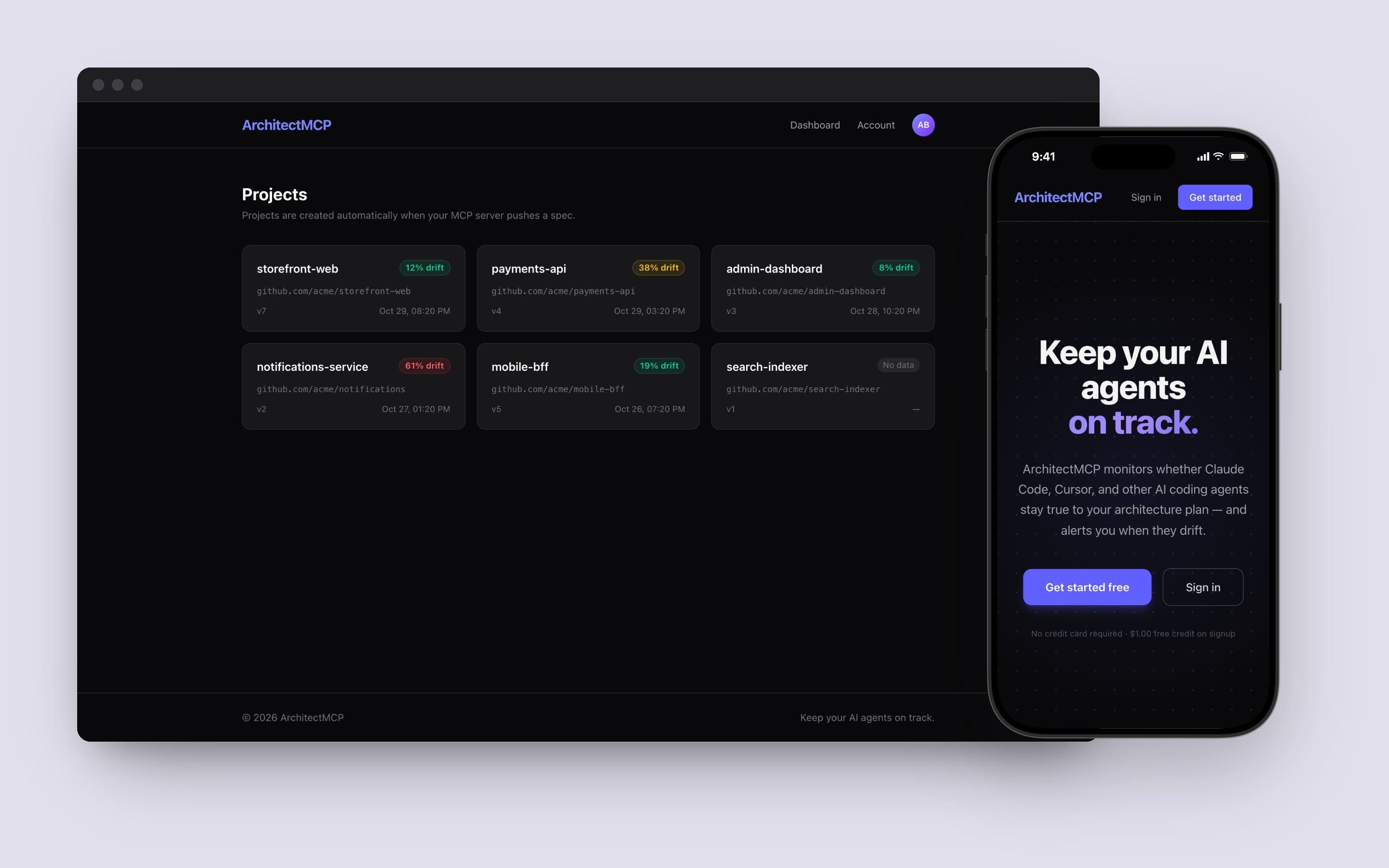
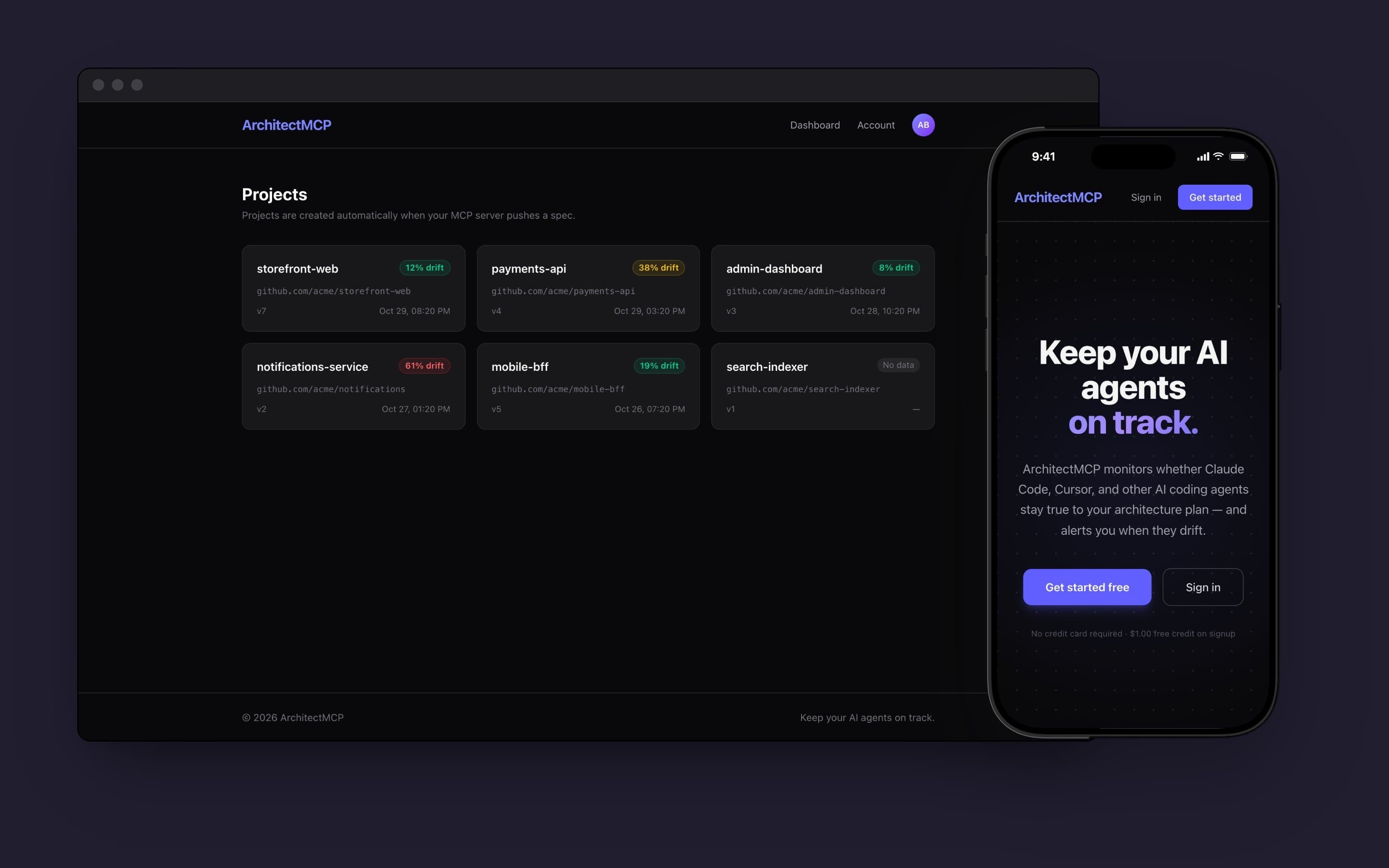
- Made the Next.js dashboard with Clerk sign-in (GitHub, Google), projects with drift charts and API key management, plus Swagger docs and a Docker setup.
How it's built
AI agentsClaude Code, Cursor
Next.js dashboardClerk sign-in
MCP serverGo, by my co-founder
Express backendLicensing, auth, billing
LemonSqueezySubscriptions and payments
PostgreSQLPrisma
An agent connects with its API key. The backend checks the key and issues a 7-day JWT, and each paid call takes $0.01 from the balance.
All in one Turborepo monorepo.
Stack
- TypeScript
- Next.js
- Express.js
- Prisma
- PostgreSQL
- Clerk
- Turborepo
- Docker
- MCP
Screens